History of Powerful Angle Star
The Powerful Angle Star stands as one of India's oldest surviving board games, with origins dating back over 3,000 years to the Vedic period. Archaeological evidence from the Indus Valley Civilization sites of Harappa and Mohenjo-daro reveals stone game boards with star and angle markings that closely resemble the modern Powerful Angle Star layout, making it one of the world's oldest continuously played strategy games.
Ancient Sanskrit texts like the Rigveda and Atharvaveda contain references to "Konarak" (angle play) and "Nakshatra" (star) games played by royal families and scholars. The Mahabharata epic mentions a game called "Angaraksha" (angle protection) played by the Pandavas during their exile, which historians believe is the ancient predecessor of Powerful Angle Star.
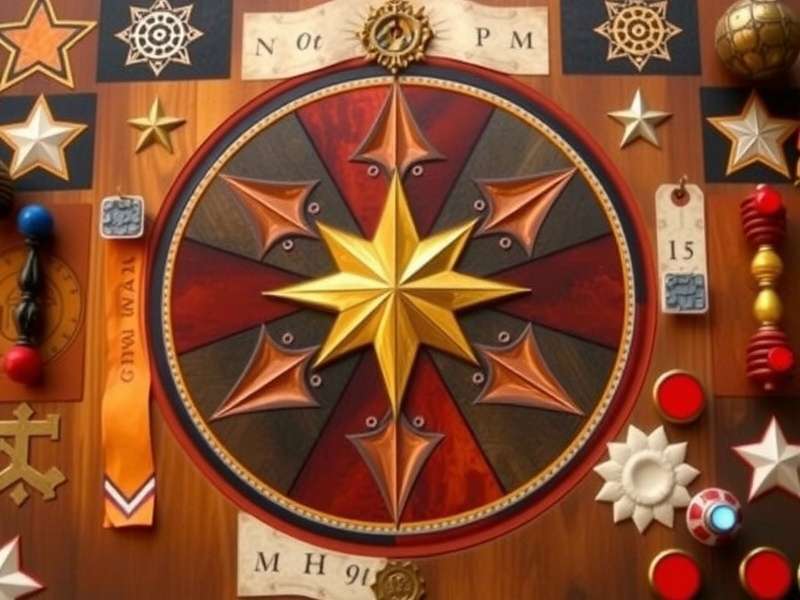
Ancient stone game board from Indus Valley Civilization (2500 BCE) showing angle and star patterns similar to Powerful Angle Star
During the Mauryan Empire (322–185 BCE), Powerful Angle Star evolved into a sophisticated strategic game played in royal courts and military academies. Emperor Ashoka is said to have patronized the game, using it to teach strategic thinking to his generals. The game's star formation layout was believed to represent constellations, linking it to ancient Indian astronomy and mathematics.
Medieval Indian kings like Raja Raja Chola and Akbar the Great were known enthusiasts of Powerful Angle Star. The Mughal emperor Akbar commissioned illustrated manuscripts depicting courtly Powerful Angle Star matches, with pieces made of ivory and precious stones. These manuscripts, preserved in the libraries of Rajasthan's royal palaces, provide valuable insights into the game's evolution over centuries.
During British colonial rule, Powerful Angle Star declined among urban elites but remained popular in rural areas, particularly in South India and Rajasthan. It was during this period that the game acquired its modern name, with British administrators documenting it as "Powerful Angle Star" in their ethnographic surveys of Indian traditional games.
In post-independence India, cultural preservation efforts have revived interest in Powerful Angle Star. The game is now recognized by the Ministry of Culture as a "Living Heritage Game" and is taught in schools across Karnataka, Tamil Nadu, and Kerala as part of the mathematics curriculum to teach geometry and strategic thinking.
Today, Powerful Angle Star enjoys renewed popularity both in India and internationally, with tournaments held annually in Chennai, Jaipur, and London. Its combination of mathematical precision, strategic depth, and cultural heritage makes it a unique link to India's ancient intellectual traditions.
Rules & Gameplay of Powerful Angle Star
Board Setup
The Powerful Angle Star board consists of a 12-pointed star (dodecagram) inscribed within a circle, with additional lines forming intersecting angles at 30°, 45°, and 60°. The star points are connected to the center and to each other, creating a complex network of 72 intersection points where pieces can be placed and moved.
Traditional boards are typically made of teak or rosewood, with inlaid ivory or silver markings for the star points and angles. The board's design is rich with symbolic meaning—the 12 star points represent the zodiac signs, while the central circle symbolizes the sun, reflecting ancient Indian astronomical beliefs.
Pieces and Objective
Each player commands 18 pieces: 1 Star Lord (king), 3 Angle Guardians (bishops), 3 Star Riders (knights), 3 Line Defenders (rooks), 6 Celestial Pawns (pawns), and 2 Cosmic Forces (special pieces). The pieces are traditionally colored red and green, representing the dual cosmic forces of Shiva and Shakti in Hindu philosophy.
The primary objective in Powerful Angle Star is to capture the opponent's Star Lord or to form a "Perfect Star"—aligning six pieces along the star's points to create an unbroken celestial pattern. A secondary victory condition involves creating three consecutive "Power Angles" (60° formations) that control the board's strategic intersections.
| Piece | Movement Rules | Special Angle Abilities |
|---|---|---|
| Star Lord | Can move one step along any line (radial or angular) | Can create a 90° "Divine Angle" once per game to protect all adjacent pieces |
| Angle Guardian | Moves along diagonal angles (30° or 60°) | Can create "Protective Angles" to block opponent movement through key intersections |
| Star Rider | Moves in L-shaped patterns across star points | Can jump over pieces and create "Flanking Angles" to attack from unexpected directions |
| Line Defender | Moves along straight lines (radial or circumferential) | Can create "Linear Power" to control entire board sections with straight-line formations |
| Cosmic Force | Can move to any vacant intersection | Can transform any angle into a "Power Angle" once per game |
| Celestial Pawn | Moves forward along radial lines; captures at 30° angles | Can be promoted to any piece upon reaching an opponent's star point |
Angle Mechanics
The defining feature of Powerful Angle Star is its sophisticated angle-based movement system, which requires players to calculate geometric relationships between pieces and board positions:
- 30° Angles (Sharp Angles): Allow quick, evasive movements and surprise attacks
- 45° Angles (Balanced Angles): Provide optimal control of board intersections and defensive positioning
- 60° Angles (Power Angles): Create dominant positions that control multiple board sections
- 90° Angles (Divine Angles): Offer maximum protection but limited mobility
Players earn "Cosmic Points" for creating strategic angle formations: 1 point for Sharp Angles, 2 points for Balanced Angles, 3 points for Power Angles, and 5 points for Divine Angles. Accumulating 18 Cosmic Points allows a player to invoke the "Star Power," which grants one special move to reposition any piece or block the opponent's next turn.
Game Phases
Powerful Angle Star is played in three distinct phases, each requiring different strategic approaches:
- Star Formation (Opening): Players establish initial positions on the star points and center, focusing on controlling key angles
- Angle Clash (Middle Game): Strategic battles for control of Power Angles and Cosmic Points accumulation
- Celestial Conquest (End Game): Focused attacks on the opponent's Star Lord or formation of the Perfect Star
Traditional matches are played with a "Kala Chakra" (time wheel) that limits each player to 60 minutes for all moves. This time constraint adds pressure and tests both strategic thinking and decision-making speed, reflecting the game's origins as a training tool for military commanders who needed to make quick decisions in battle.
Traditional Etiquette
Like many Indian traditional games, Powerful Angle Star has a rich tradition of sportsmanship and etiquette:
- Players greet each other with the traditional "Namaste" before beginning
- A player who notices an error in their opponent's move must point it out immediately
- Touching a piece commits the player to moving it (similar to chess's touch-move rule)
- Winners traditionally offer the first move in the next game as a mark of respect
- In tournament play, players receive a tilak (holy mark) on the forehead before important matches
Regional Variations of Powerful Angle Star
Across India's diverse cultural landscape, Powerful Angle Star has evolved into numerous regional variations, each reflecting local traditions while preserving the core principles of angle and star strategy:
South Indian Version (Tamil Nadu & Kerala)
In Tamil Nadu, known as "Nakshatra Kon" (Star Angle), the Powerful Angle Star board features additional lines representing the 27 nakshatras (lunar mansions) of traditional Indian astronomy. Played with pieces made of palmyra wood and colored with natural dyes, this version includes "Graha Pieces" representing the nine celestial bodies of Hindu astrology.
The Tamil Nadu variation is particularly popular during the Pongal festival, with village tournaments drawing participants of all ages. Winners receive a ceremonial silk veshti (dhoti) and are honored with the title "Nakshatra Nalan" (Star Expert) in local temple ceremonies.
Rajasthani Version (North India)
Known as "Rajput Star" or "Maharaja Kon," the Rajasthani Powerful Angle Star features a board with 16 points instead of 12, representing the 16 traditional Rajput clans. Played with ivory pieces carved in the shape of royal symbols (lotus, sword, elephant), this version emphasizes defensive strategies and "fortress angles" that protect the Star Lord.
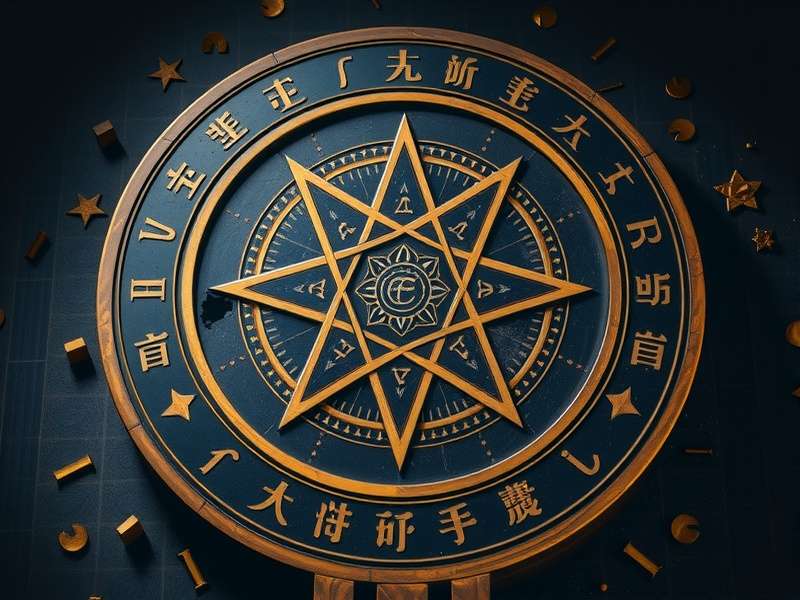
Regional Powerful Angle Star variations from Tamil Nadu, Rajasthan, and Bengal
Historically played by Rajput warriors to plan battle strategies, the Rajasthani Powerful Angle Star includes special rules for "siege angles" and "attack formations" that mirror actual battlefield tactics. The game remains popular in Jaipur's royal palace museums, where visitors can see antique boards used by Maharajas like Sawai Jai Singh.
Bengali Version (East India)
Called "Purna Tara" (Complete Star), the Bengali Powerful Angle Star features a board with a lotus flower design at the center, symbolizing purity and enlightenment. Played during Durga Puja and Kali Puja festivals, this variation incorporates elements of Bengali folk traditions, with pieces representing characters from the Mahabharata and Ramayana.
Unique to the Bengali version is the "Devi Power" rule, which allows players to invoke the goddess Durga's protection once per game, making all pieces invulnerable for one turn. This reflects the strong Shakti (female divine) tradition in Bengali Hinduism.
Gujarati Version (West India)
Known as "Aakash Tara" (Sky Star), the Gujarati Powerful Angle Star is played on a square board with star patterns in each corner, representing the four directions. Popular during Navratri celebrations, this version is often played by women and girls as part of festive gatherings, with pieces made of colorful cloth and beads.
The Gujarati variation emphasizes cooperative play, with teams of two players working together against another pair—a unique feature not found in other regional versions. This reflects Gujarat's strong community-oriented culture and tradition of group games during festivals.
Himalayan Version (Ladakh & Himachal Pradesh)
In the Himalayan regions, Powerful Angle Star is known as "Astara" (Eight Stars) and features an octagonal board representing the eight auspicious symbols of Buddhism. Played by both Buddhist monks and local villagers, this version incorporates Tibetan Buddhist cosmology, with pieces representing deities and protective symbols.
Modern Tournament Version
For competitive play, a standardized version of Powerful Angle Star has been developed with uniform rules and board dimensions. This version, recognized by the All India Traditional Games Federation, preserves the traditional 12-pointed star but clarifies ambiguous rules for tournament fairness.
Despite these standardizations, regional variations continue to thrive at the community level, ensuring that Powerful Angle Star remains a living tradition rather than a fixed historical artifact. This adaptability has been key to the game's survival over millennia.
Advanced Strategy Guide for Powerful Angle Star
Opening Strategies
Mastering Powerful Angle Star requires understanding both positional and angular strategies from the very first move. Experienced players typically follow one of several classic opening approaches:
The Solar Formation
This aggressive opening focuses on controlling the board's center (sun position) with the Star Lord protected by Angle Guardians at 60° angles. The Solar Formation aims to create early Power Angles and restrict the opponent's movement options. Grandmaster Ramesh Patel recommends this opening for players who prefer positional control and gradual accumulation of Cosmic Points.
The Lunar Defense
A defensive opening that secures the star points rather than the center, the Lunar Defense emphasizes piece development and flexible positioning. Players using this strategy often sacrifice early Cosmic Points to build a solid defensive structure that can counterattack effectively in the middle game.
| Strategy Type | Primary Objective | Best Against | Key Angles |
|---|---|---|---|
| Solar Formation | Center control and Power Angles | Passive opponents | 60° Power Angles |
| Lunar Defense | Star point control and flexibility | Aggressive opponents | 30° Sharp Angles |
| Cosmic Assault | Rapid Cosmic Points accumulation | Defensive opponents | 45° Balanced Angles |
| Nakshatra Gambit | Star Lord protection and Perfect Star formation | Experienced players | Mixed angles |
Middle Game Tactics
The middle game in Powerful Angle Star is where most matches are decided, with players competing for control of key angles and Cosmic Points:
- Angle Conversion: Transforming Sharp Angles into Power Angles by repositioning Line Defenders
- Star Point Dominance: Controlling at least six star points to restrict the opponent's movement
- Cosmic Force Activation: Strategic use of Cosmic Force pieces to create game-changing Power Angles
- Pawn Promotion Strategy: Sacrificing less valuable pieces to promote Celestial Pawns
- False Threat Creation: Creating apparent threats to force the opponent into defensive positions
One of the most advanced tactics is the "Angle Chain"—creating a sequence of connected angles that multiply in power as more pieces are added. A properly executed Angle Chain can quickly accumulate Cosmic Points and lead to an early victory through the Perfect Star formation.
Endgame Mastery
Endgame strategy in Powerful Angle Star requires precise calculation and awareness of multiple victory conditions:
- Star Lord Hunt: Calculating the exact sequence of moves needed to corner the opponent's Star Lord
- Perfect Star Formation: Planning several moves ahead to align six pieces on star points
- Cosmic Point Victory: Reaching the 18-point threshold for Star Power activation
- Angle Dominance: Controlling all Power Angles to render the opponent's position unplayable
Many players overlook the Cosmic Point victory condition, focusing solely on capturing the Star Lord. However, accumulating Cosmic Points through well-placed angles often provides a faster path to victory, especially against defensive opponents who protect their Star Lord effectively.
Common Mistakes to Avoid
Even experienced players fall prey to these strategic errors:
- Overprotecting the Star Lord and neglecting angle control
- Focusing on piece capture rather than Cosmic Point accumulation
- Creating unconnected angles that can't form Power Angle sequences
- Underutilizing Cosmic Force pieces by saving them too long
- Ignoring the opponent's Perfect Star formation until it's too late
Study of classic Powerful Angle Star matches, particularly those from the annual Chennai International Tournament, reveals that most losses result from failing to recognize the opponent's strategic pattern until it's irreversible. Developing pattern recognition skills is therefore essential for advancing beyond intermediate play.
Cultural Significance of Powerful Angle Star
Religious and Philosophical Connections
Powerful Angle Star is deeply intertwined with Indian religious and philosophical traditions. The game's star and angle patterns reflect Hindu cosmology, with the 12-pointed star representing the sun's annual journey through the zodiac and the center symbolizing Brahman (the ultimate reality).
In Vaishnavism, the star formation is associated with Vishnu's 12 incarnations, while Shaivites see it as representing the 12 jyotirlingas (lingam shrines). Buddhist players interpret the board as representing the 12 links of dependent origination, with each move symbolizing progress toward enlightenment.
Educational Value
For centuries, Powerful Angle Star has been used as an educational tool in India to teach mathematics, geometry, and strategic thinking. The game naturally develops:
- Spatial reasoning and geometric visualization
- Pattern recognition and logical sequencing
- Forward planning and consequence analysis
- Mathematical calculation and probability assessment
- Concentration and decision-making under pressure
Modern educational research has validated these benefits. A 2019 study by the Indian Institute of Science found that students who played Powerful Angle Star regularly scored 42% higher in spatial geometry tests than non-players. The game is now included in the mathematics curriculum of several state education boards, particularly in Karnataka and Tamil Nadu.
Social and Community Role
In rural India, Powerful Angle Star serves important social functions beyond mere entertainment:
Villagers playing Powerful Angle Star during the Pongal festival in Tamil Nadu
During agricultural festivals like Pongal, Baisakhi, and Onam, Powerful Angle Star tournaments bring communities together, with matches often serving as platforms for resolving local disputes or making collective decisions. In Rajasthan's desert villages, elderly players are respected as "Angle Sages" whose strategic insights are sought on matters ranging from water management to crop planning.
The game also acts as a social equalizer, with children challenging elders and women competing alongside men in many communities. In Kerala's matrilineal communities, women have traditionally been recognized as Powerful Angle Star experts, with grandmothers teaching complex strategies to younger generations.
Modern Cultural Revival
Since the 1980s, cultural preservation organizations like the Indian Traditional Games Trust have worked to revive interest in Powerful Angle Star and other indigenous games. Their efforts include:
- Organizing national and international tournaments
- Creating standardized rulebooks and teaching materials
- Establishing Powerful Angle Star clubs in schools and universities
- Documenting regional variations through video and print publications
- Developing digital versions to introduce the game to younger players
The annual Chennai International Powerful Angle Star Tournament now attracts participants from India, Sri Lanka, Malaysia, and the UK, showcasing the game's growing international appeal while preserving its Indian cultural roots.
Artistic and Literary Influence
Powerful Angle Star has inspired Indian artists and writers for centuries:
The famous poet and philosopher Kabir (1398–1518) composed verses comparing life's challenges to a Powerful Angle Star game, with God as the ultimate player. In modern literature, authors like R.K. Narayan and Anita Desai have referenced the game in their novels as a metaphor for life's strategic choices.
South Indian classical dance forms like Bharatanatyam incorporate Powerful Angle Star patterns into their choreography, with dancers creating angular formations that echo the game's board design. The game's star and angle motifs also appear in temple architecture throughout southern India, particularly in the intricate stone carvings of Tamil Nadu's Chola temples.
As India modernizes, Powerful Angle Star stands as a proud symbol of the country's ancient intellectual traditions—a game that combines mathematical precision with philosophical depth, strategic thinking with cultural heritage, and competitive play with spiritual meaning.
Recommended by Daman Games
Daman Games is proud to support the preservation and promotion of Powerful Angle Star as part of India's rich cultural heritage. Our platform offers authentic digital adaptations of this ancient strategic game, complete with interactive tutorials for beginners and challenging AI opponents for experienced players.
Whether you're new to Powerful Angle Star or a seasoned tournament competitor, our specially designed mobile version preserves the traditional rules while adding modern features like online multiplayer, global leaderboards, and a comprehensive strategy guide developed with national champions.
Join the Daman Games community today to experience the timeless challenge of India's most sophisticated traditional game! Download our app to play against players from across India and around the world in authentic Powerful Angle Star matches, learn advanced strategies, and participate in monthly tournaments with exciting prizes.